
Shaping Skills for Manufacturing
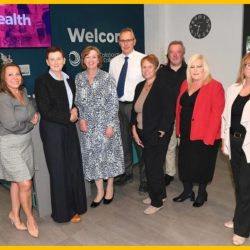
In August, Lancashire Business View invited Kate to be part of this discussion about the next generation of manufacturing. Sitting alongside other industry and business leaders, they met at Blackburn College to discuss what Lancashire’s next generation of manufacturing might look like.
What are your thoughts on closing the manufacturing skills gap? How can local businesses better attract fresh talent?
Bryan Welch
Perspex International
“I see a number of challenges we need to overcome, particularly in our industry, which is very energy intensive. It is about finding our way forward in a high energy environment and managing the cost of energy, but also moving towards automation. There’s a strong need for more automation and the skills we need must be adjusted into that world where we have higher levels of automation in manufacturing.
In a manufacturing business like ours, so many people who joined in one area are now doing something completely different. Our company is full of people who started as plant operators and they are now accountants or production schedulers. I started as a sales rep and now I’m operations director.”
Paula Gill
North West Aerospace Alliance
“At this moment in time in Lancashire we have such a condensed area of manufacturers, not just across aerospace and defence but across automotive, manufacturing for nuclear components. What we have a need for now is change, and that change comes with people and skills.”
Darren Grantham
Make UK
“Every year Make UK does National Manufacturing Day where we encourage our members to open the doors of their businesses for schools and colleges to come in and have a look at what goes on there. It’s a difficult ask because there’s all sorts of health and safety issues and things like that, but we do get a really good uptake on it.”
Melissa Conlon
Advanced Manufacturing Research Centre North West
“If you look at our careers, historically they have been linear. I look at CVs sometimes and if somebody has moved around a lot, 10 years ago that would go to the bottom of my pile and I would not take that person on. I look at it now and I think, okay, so what have you gained from that role as opposed to what you did in that role, what was different about that, and when I’m interviewing them I really dig deeply into what skills they’ve learned.”
Karen Keighley
Tapeswitch
“I do not consider myself a manufacturer, but you can’t have a manufacturing company without somebody that knows about accounts and finance and people and everything else. I don’t know how to make anything, but I know how to run the company. When it comes to recruitment, I have always employed people based on their attitude over their skills. You can teach someone to weld or solder or whatever, but you can’t teach people how to be on time, how to interact with other colleagues, and that sort of thing.”
Sara Gaskell
Lancashire Skills and Employment Hub
“One of the things we need to be mindful of is around automation and AI, and how we get that message out to feed future talent pipelines. We need to be making sure businesses are more involved in the design and development of curriculums and are getting involved with schools and colleges to support young people so they have that throughput of talent to make them effective in the future.”
Kate Houlden
Like Technologies
“It’s not just thinking about the manufacturers themselves, it’s also thinking about all of those supply chains that sit behind it. As a company we have been working on masterclasses in terms of curriculum and education projects, including sessions for colleges. What we are starting, as well as T-level placements, is to get some of the tutors from colleges in the north of Lancashire out to some of these SMEs because they don’t actually keep abreast of what these SMEs are doing, and what they can offer.”
Claire Shore
Blackburn College
“From a skills perspective, we can teach the things our business community wants, but the real value comes when our students go into a business and see what they are doing.”